Hryvnia — 30 years: how the first money from Canada secretly arrived in the Korabelnyi District
Printed abroad and hidden for four years: how Ukraine acquired the hryvnia


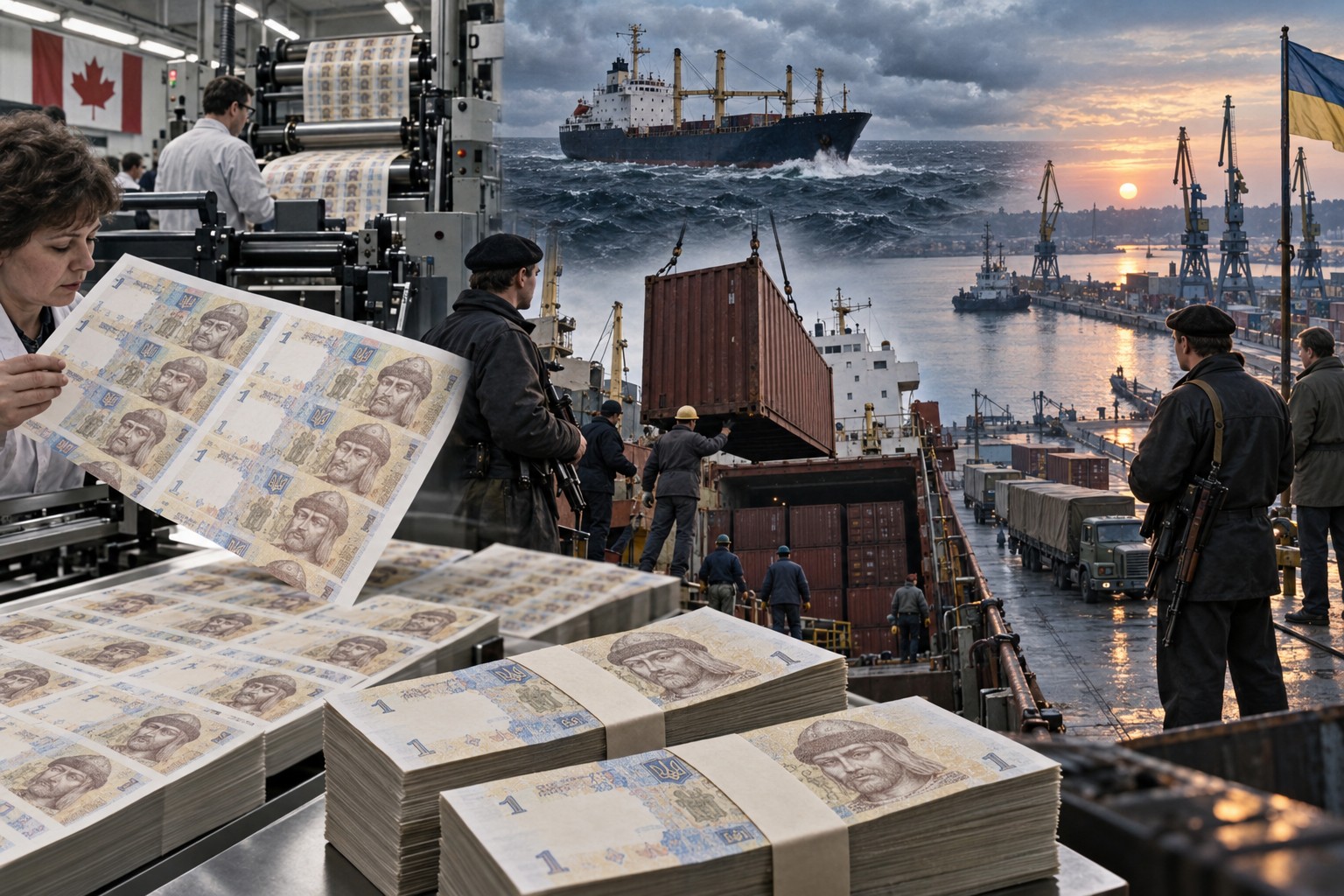
On 2 September 2026 the Ukrainian hryvnia turned 30 years old. However, the first banknotes of the future national currency appeared in Ukraine much earlier — back in 1992. They were shipped across the Atlantic and unloaded at the special port “Oktyabrsk” in the Korabelnyi District of Mykolaiv.
The hryvnias were printed abroad
After the declaration of Independence, Ukraine still did not have its own equipment for producing secure banknotes and banknote paper. The design of the new money was developed by Ukrainian artists Vasyl Ivanovych Lopata and Borys Ivanovych Maksymov.
Banknotes with denominations of 1, 2, 5, 10 and 20 hryvnias were ordered from the Canadian Bank Note Company in Canada. Notes of 50 and 100 hryvnias were produced by the British company Thomas De La Rue at its factory in Malta. Some of the small change coins were minted in Italy, and some at the Luhansk Machine-Building Plant. According to the National Bank of Ukraine, the young state did not have enough funds, so the first hryvnias were effectively printed on credit. History of the Ukrainian hryvnia — NBU
Secret voyage across the Atlantic
Shipping the entire print run by air would have been too expensive, so the money was sent by sea. The operation received the code name “Shield of Ukraine”. A civilian cargo ship, “Petr Aleynikov”, was chosen for it. Part of the crew was replaced by special unit members who were officially enrolled as seamen.
On 19 August 1992 the vessel departed from the port of Illichivsk, now called Chornomorsk, and set course for Montreal. Only the state leadership, the ship’s captain and the participants of the special operation knew the true purpose of the voyage.
On 9 September 1992 the ship arrived in Canada. The banknotes were taken from the factory near Ottawa to the port by trucks under armed escort from the Canadian police. Already on 13 September the ship’s holds were loaded with 105 maritime containers of hryvnias.
After that the ship called at Malta, where it took on more than 20 containers of 50 and 100 hryvnia notes. Anniversary publications in 2026 specify the exact number — 23 containers. Thus, a total of 128 containers with the future currency of Ukraine ended up on board. Detailed history of the special operation — ZN.UA
The money arrived in the Korabelnyi District
The final maritime destination was kept secret. The ship did not go to Odesa, but to the special port “Oktyabrsk” near Mykolaiv. Today this is the seaport “Olvia”, whose checkpoint officially belongs to the Korabelnyi District.
Open sources differ on the arrival date. The former head of the operation, Vasyl Vasyliovych Krutov, in memoirs published in 2003 named 30 September 1992. However, a number of more recent anniversary materials indicate 2 October 1992. The main fact remains indisputable: it was “Oktyabrsk” that became the maritime gateway through which the first hryvnias entered Ukraine. Vasyl Krutov’s recollections about the operation
At the port the secret cargo was met by special forces and representatives of the National Bank. The completion of the seaborne part of the operation was reported to the then head of the SBU, Yevhen Kyrylovych Marchuk.
The containers were transshipped onto three vessels of the “river-sea” class. The money was then taken up the Dnipro to Kyiv, where it was loaded into special vehicles and placed in several vaults. Security of the cargo along the entire route was the responsibility of the Security Service of Ukraine.
Why the hryvnias waited another four years
Despite the fact that the banknotes were already in Ukraine, they were not put into circulation immediately. In 1992–1994 the country experienced hyperinflation, so the hryvnia could quickly have suffered the same fate as the devalued coupon-karbovanets.
Only on 25 August 1996 did the President of Ukraine sign a decree to carry out a monetary reform. It took place from 2 to 16 September 1996. Coupon-karbovanets notes were exchanged at a rate of 100,000 karbovantsiv for 1 hryvnia. From 17 September the hryvnia became the sole legal means of payment in Ukraine. Data from the National Bank
At the time of the reform, more than 338 trillion karbovantsiv were in circulation. Within two weeks it was possible to withdraw about 97% of that amount and issue more than 3.1 billion hryvnias.
Thus the Korabelnyi District of Mykolaiv became part of one of the most important operations of the early years of Independence. Ukrainian money was not just printed overseas — it literally sailed into the country through the local port.
Previously we wrote:
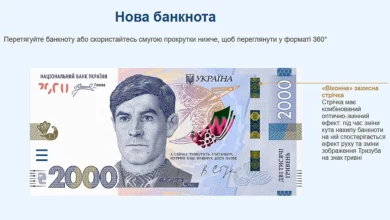
- In Ukraine, from 4 September a 2,000 hryvnia banknote featuring Vasyl Stus will be put into circulation
- A thousand is already too small: the NBU introduces a 2,000 hryvnia note with Vasyl Stus
- Ukraine will stop accepting old 1, 2, 5 and 10 hryvnia banknotes
- Small change is going: 10 kopiykas are officially withdrawn from circulation
- Ukrainian “shah” instead of the kopiyka: parliament took the first step