Heat and drought are causing a locust outbreak in the Mykolaiv region: grains, corn and sunflowers at risk
Outbreaks of the insect develop in fallow land, pastures, and roadsides, from where it migrates to vegetable and forage crops; farmers are advised to monitor in the morning and evening


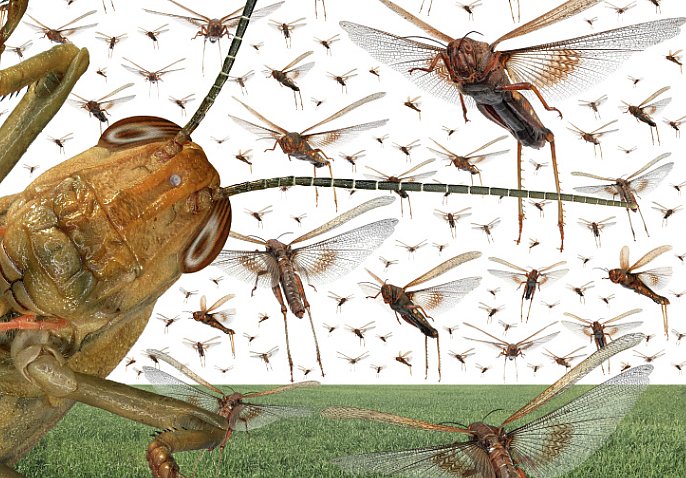
The Main Department of the State Service of Ukraine for Food Safety and Consumer Protection in Mykolaiv Oblast warned farmers about the risk of mass reproduction of locusts in the region’s fields, which is associated with high air temperatures and prolonged periods of drought.
Experts emphasize that locusts are among the most dangerous polyphagous pests of agricultural crops, and in Ukraine the greatest threat is posed by the migratory locust (Locusta migratoria L.) and the Italian locust (Calliptamus italicus L.). Their outbreaks damage cereals, maize, sunflower, vegetable and fodder crops, as well as natural vegetation.
The current weather conditions create a favorable background for a rapid increase in the number of these insects. Under such circumstances, locusts can form centers of mass development, leading to large-scale damage to leaves, shoots and stems, and at high population densities — to a complete loss of leaf surface on plants.
The main breeding sites of the pest are fallow land and pastures, road verges, riverbanks, irrigation channels, shelterbelts and areas with weeds. It is from such territories that locusts usually migrate to agricultural lands, where they cause the greatest losses.
Signs of locust presence in crops include eaten leaves, shoots and stems, damaged inflorescences and fruits, uneven thinning of plants, and in the case of high numbers — complete destruction of leaf surface, as well as the mass presence of nymphs and adult insects directly in the fields.
Farmers are advised to systematically inspect their land, primarily those bordering fallow land, pastures and other uncultivated areas. It is most convenient to carry out monitoring in the morning and evening hours, when the insects are less active, which increases the effectiveness of detecting infestations.
If the pest density exceeds the economic threshold of harm, it is recommended to apply insecticides permitted in Ukraine with mandatory compliance with their usage requirements. Such treatments give the best results against younger-stage nymphs, so it is important not to delay responding.
Experts emphasize that isolated individuals do not pose a significant threat to the crop, but the danger rises sharply during mass reproduction of locusts. The key to protecting fields remains regular phytosanitary monitoring, preventive measures and timely local destruction of pest foci.
Earlier we wrote:
- Soil has already dried out: in Mykolaiv region there has been no rain for up to 20 days, harvest at risk
- Mykolaiv region sets temperature records: soil up to +69°C
- Residents of Mykolaiv region were warned about a new wave of drought: the harvest – at risk due to an unfavorable climate
- Drought in Mykolaiv region: where are the locusts flying when there is no harvest?
- Tomatoes scorched, maize depressed: July heat destroys Mykolaiv fields