She sleeps with the occupiers — and turns them in to the Armed Forces of Ukraine: the story of an underground operative who works through "Atesh"
Intimacy and intelligence: how a Ukrainian woman relays the enemy's coordinates straight from their beds



The outlet BBC News Ukraine April 4 2026 published the story of a Ukrainian woman who, under occupation, conducts dangerous underground activities against Russian servicemen. The woman, who for security reasons is called Albina, is forced to work in the sex industry and uses this as a way to obtain intelligence.
Before the full-scale war she worked as a waitress, but after the occupation she lost her job and was forced to go work in the so-called “office”. There her clients were mostly Russian military. Over time she began to use these contacts to collect information.
“Drunk men tell a lot of interesting things. They don’t think that the woman they paid could pass anything on,” – notes Albina.
The woman says she talks with clients and gradually obtains data about deployment locations, vehicle movements and the mood among the troops. She passes the collected information to a coordinator in territory controlled by Ukraine via secure messaging.
“Once my client, a soldier, let slip to me the location of their headquarters’ base. I passed that information to the coordinator, and about a couple of days later it was hit,” – the woman recounts.
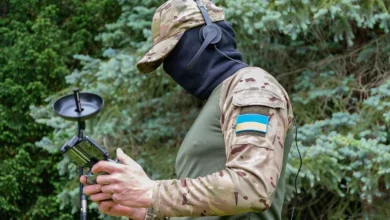
Later Albina established contact with the underground movement “Atesh”, which operates in the occupied territories. It is through this channel that she transmits information, after undergoing an initial reliability check.
“Albina messaged our official contact account. At first she went through the standard verification procedure — we have to be sure it’s not an FSB trap. She proved her reliability by providing data that was quickly confirmed by other sources,” – the movement’s coordinator confirmed in an interview with the BBC.
According to him, the information the woman provides often concerns not only equipment but also redeployment plans, headquarters’ base locations and the moods of the officer corps.
Albina herself emphasizes that she does not receive payment for this activity and acts solely on her own initiative, understanding all the risks.
“Of course, I wouldn’t wish this kind of work on anyone. But when it happened, I felt proud that I was able to help,” – the woman said.
At the same time, experts note that such methods of collecting information have been used around the world for a long time, but their importance increases during war. Retired SBU Major Ivan Stupak explains that such sources do not provide full evidence, but can be important for operational work. He also emphasizes that Russian security services are well aware of these risks and vet people who may have contact with servicemen. Despite the constant danger, Albina continues to work and pass on information, remaining part of the invisible resistance in the occupied territories.