The state needs culture, but find the money for it yourselves: the ministry’s response to Mykolaiv
Founders of institutions reminded of their responsibility for paying employees


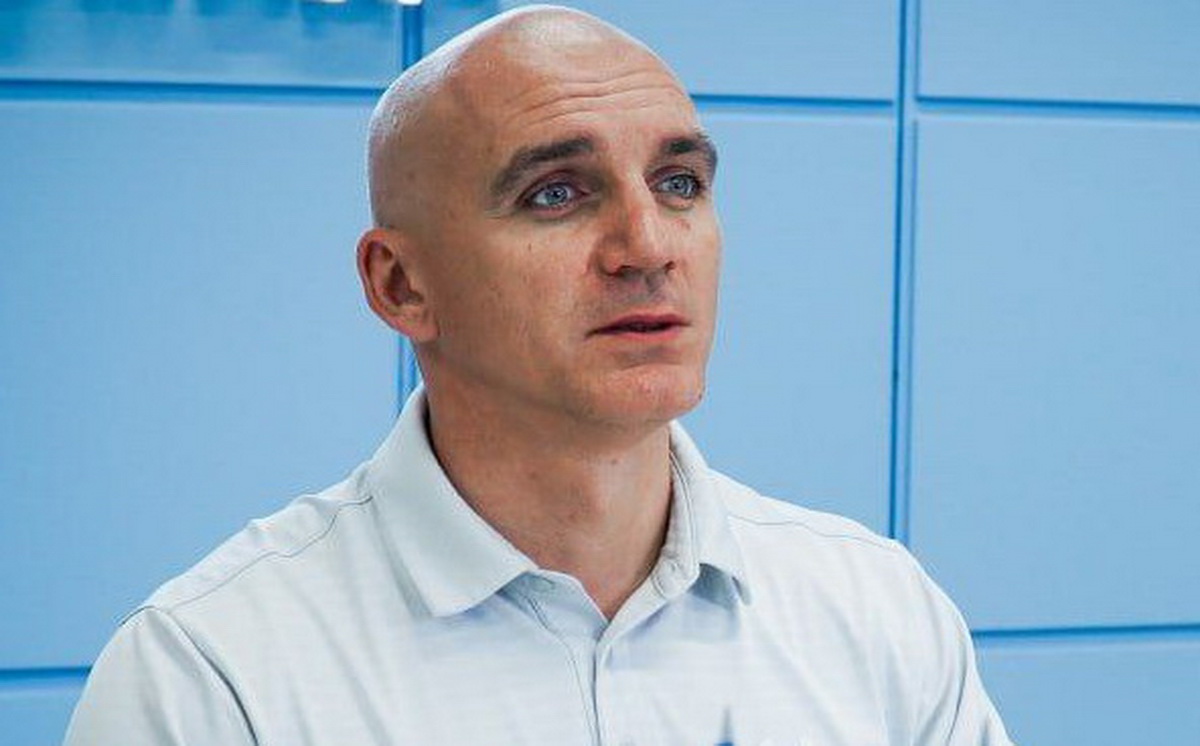
Responsibility for the salaries of employees at municipal cultural institutions lies with their founders — the local authorities. This position was set out by the Ministry of Culture of Ukraine in its reply to a collective appeal from Mykolaiv. The ministry also reminded local communities of its recommendation to optimize the network of institutions so that the funds released could be directed toward raising wages.
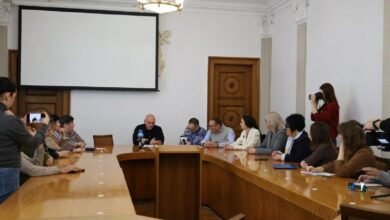
The reply is contained in a letter from the Ministry of Culture’s Financial Policy Department dated November 20. Mayor Oleksandr Sienkevych discussed it with industry representatives at a meeting at the Mykolaiv City Council on November 23.
The cultural workers’ appeal was received by the ministry on November 18. They asked the government to provide local communities with a subvention to implement Cabinet of Ministers Resolution No. 951 of July 15, 2026, “Certain Issues Regarding the Remuneration of Employees of State and Municipal Cultural Institutions.” The document provides for a substantial increase in base salaries starting January 1, 2027.
The resolution assigns responsibility for ensuring the salary increases at institutions under their authority to regional and Kyiv City State (Military) Administrations. For local self-government bodies, providing the relevant payments is a recommendation.
“Therefore, ensuring the payment of salaries to employees of cultural institutions falls within the remit of their founders,” the Ministry of Culture letter states.
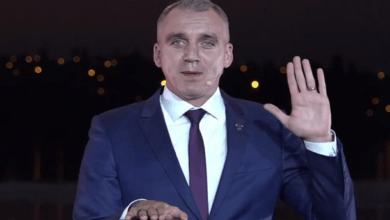
Commenting on the ministry’s response, the mayor gave it a much sharper interpretation:
“The conclusion is that this is your culture — local culture. These are your salaries, these are your responsibilities. So if you don’t have enough money, cut culture, cut whatever you think is necessary, and we can’t help you with that,” Oleksandr Sienkevych said, commenting on the letter.
At the same time, the document itself does not directly require cuts to the cultural sector. The ministry acknowledges that martial law places a significant burden on local budgets. In response, it points to the recommendation in Resolution No. 951 to develop and implement measures to optimize the network of institutions and make rational use of staffing levels. It suggests using the money saved in this way to raise wages. The letter does not address the lack of funds for payments through the end of 2026.
The response concludes by mentioning draft state budget No. 16000 for 2027, submitted to the Verkhovna Rada on September 15. The ministry then sets out the provisions of Parliament’s Rules of Procedure on the submission of proposals to the draft by members of parliament and committees.
“They’re telling us this is our responsibility. In other words, we understand that your budget situation is bad, but this isn’t a matter for us — it’s a matter for the budget,” Mayor Oleksandr Sienkevych said.
The mayor promised to speak at a meeting on November 24 about his meeting with cultural workers and the ministry’s response, and to raise the issue of funding for Mykolaiv again.
Industry representatives at the meeting said they understood the city’s financial constraints but disagreed with the ministry’s withdrawal from efforts to resolve the problem.
“We understand that the city isn’t refusing to pay our salaries, but in my opinion, the Ministry of Culture should be doing something. Folk groups are exactly what everyone is talking about now: we nurture culture. Nobody is nurturing anything. Everything rests on our shoulders,” said one of the meeting participants.
Other participants proposed seeking the following decisions from the state:
- a separate subvention or grant to maintain cultural institutions;
- amendments to legislation regulating paid services in the cultural sector;
- amendments to legislation on patronage.
Oleksandr Sienkevych asked them to provide specific legislative proposals and promised to raise the issue.
According to the mayor, the city budget will be short of 750 million hryvnias by the end of the year. More than 9 million hryvnias must be found to pay cultural workers’ November salaries, of which 5 million had been secured by the time of the meeting. The mayor also informed President Volodymyr Zelenskyy about the funding shortfall.
More than 1,000 employees of Mykolaiv cultural institutions are at risk of going without their November and December salaries. They therefore appealed to the Cabinet of Ministers, Minister of Culture Tetiana Berezhna, and the mayor.
At the city level, the problem and its possible consequences were described as follows:
- Deputy Mayor Anatolii Petrov acknowledged that the budget had no money for these salaries.
- Culture Department Head Yurii Liubarov warned that employees could be placed on unpaid leave or put on downtime.
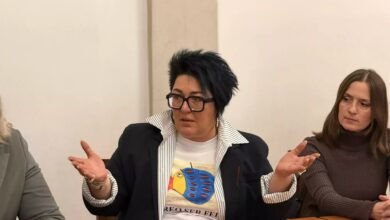
- Yuliia Zakharova, director of the Molodizhnyi Palace of Culture, said she would not lay off employees at her institution. She urged the authorities to speak plainly about the possible closure of institutions rather than hide it behind the word “optimization.”
- Other heads of cultural institutions also spoke out against further cuts at the meeting with the mayor.
The funding problem did not emerge at the end of the year: the shortfall in funds for cultural-sector salaries was already factored in when the city budget for 2026 was being prepared. The issue of low pay had also been raised in advance. In December 2025, members of the Mykolaiv City Council appealed to the government and parliament to increase cultural workers’ salaries. However, the government raised only the basic salary rate, to 3,470 hryvnias.
We previously reported:
- There’s nowhere left to cut: Mykolaiv culture officials stand up for their teams
- Mykolaiv cultural workers’ salaries may be covered with funds from other budget items
- More than a thousand Mykolaiv cultural workers risk going without pay
- Raises through cuts: local authorities must find funding for culture through optimization — Liubarov
- Cultural workers’ salaries to rise by up to 70%: who will be affected by the new rules from 2027