There’s no more to cut: Mykolaiv’s cultural leaders stand up for their teams
More than a thousand employees may go unpaid for November and December


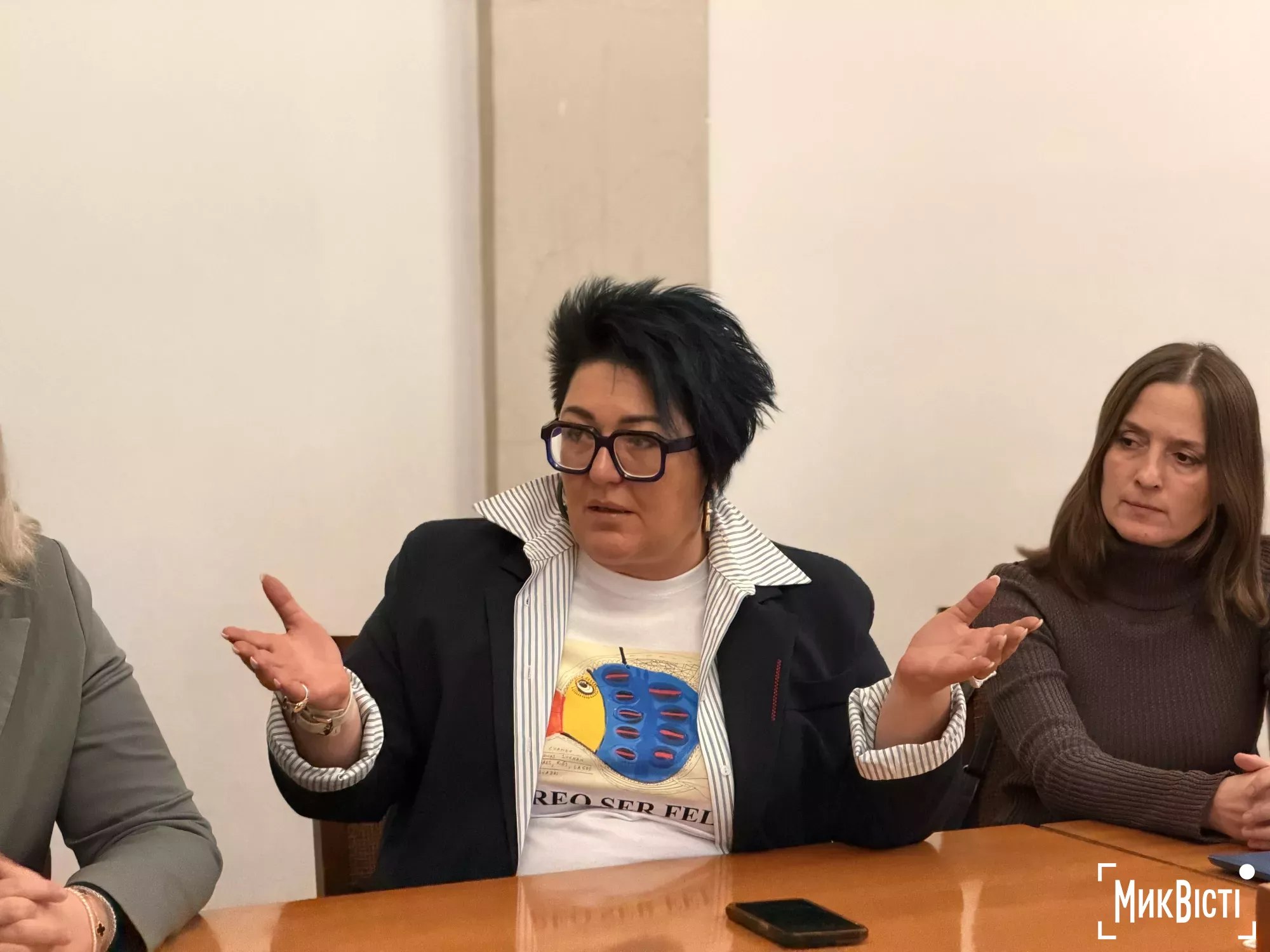
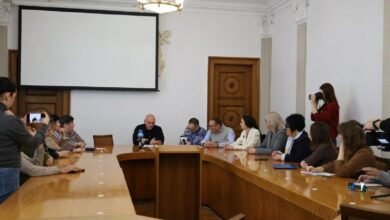
Heads of cultural institutions in Mykolaiv have spoken out against further staff cuts in the sector. At a meeting with Mayor Oleksandr Sienkevych yesterday, they warned that the war, low wages and the departure of specialists have already led to the loss of creative groups and arts education programs. Further cuts could leave the city without specialists who would be difficult to replace.
The discussion took place amid a shortage of funds for salaries and utilities through the end of 2026. Cultural workers were posting about the issue on social media in large numbers. More than a thousand people risk not receiving their salaries for November and December. The problem was also outlined in a collective letter addressed to:
- Prime Minister of Ukraine Serhii Koretskyi;
- Minister of Culture Tetiana Berezhna;
- Mayor of Mykolaiv Oleksandr Sienkevych.
Deputy Mayor Anatolii Petrov confirmed that the city budget currently has no funds for salaries for cultural institution employees. Head of the Department of Culture Yurii Lybarov explained that if funding is not found, institution directors may place staff on downtime or send them on unpaid leave.
Yuliia Zakharova, director of the Molodizhnyi Palace of Culture, stressed the role of cultural workers in educating future performers and urged the state to support these professionals.
“We understand that it’s not the city that doesn’t want to pay us, but in my view, the Ministry of Culture has to do something. Folk ensembles are exactly what everyone is calling for now: ‘Oh, we’re nurturing culture.’ Nobody is nurturing anything. It’s all on our shoulders, on the shoulders of those directors who do this work. Telethons are not culture. Culture means teaching the little ones who come to us to love their country, sing these songs, dance these dances. And it is we, the cultural institutions, who do that. For some reason, at school they’re educators, while we’re beggars. Somehow that doesn’t seem right. I think the Ministry needs to do something about it. At least keep the folk ensembles going, at least,” said Yuliia Zakharova.
Around 100 children currently attend the Molodizhnyi. Finding people to work with them is becoming increasingly difficult. According to the director, the institutions are already short of:
- directors;
- event organizers;
- club leaders.
“Because of this situation, tomorrow we’ll change professions and leave. We’ll make great managers; someone will hire us. But when the time comes and they say, ‘Oh, we have the money,’ we won’t have any specialists left. We already have a problem now,” warned Yuliia Zakharova.
The director proposed pressing the Ministry of Culture to provide separate funding for the sector.
“We need to demand that this ministry provide a subvention, a grant — I don’t know what you want to call it. Are we beggars or something? Are we some kind of useless people? We’ve been studying since childhood to enter this profession. We studied for 17 years to become teachers. And we are excellent teachers. So where do all these pop stars come from? Where do they come from? From the telethon? We’re the ones who train them,” stressed Yuliia Zakharova.
She also said she would not lay off employees at her institution because of the funding shortfall. Her demand to the authorities is to ensure fair pay or be frank about the possible closure of institutions, rather than calling it optimization.
The head of the House of Children’s Creativity in the Zavodskyi District said there was virtually no room left for further staff cuts.
“There really is nowhere left for us to optimize. We’ve already lost a lot, even compared with last year. I’ll speak about my school: I had 48 teaching positions, and today there are only 25 left. We’ve lost certain fields and creative groups,” the director said.
One example of these losses is bandura lessons, which have effectively ceased at the institution.
“My school used to have the largest bandura class. Now there isn’t a single child. The teachers left, and there are no teaching hours. I can’t even revive this specialty because there are no teaching hours. I can find a specialist, but there’s no way I can pay them,” the director explained.
She also drew attention to the families for whom the institution remains a place of learning and support.
“These are our future, our fellow citizens. And the children of internally displaced people who come to us, the children of our fallen defenders. If, for example, our school in the Zavodskyi District closes now, they’ll have nowhere to go,” the director said.
Another head of an arts institution recalled the Fomin Women’s Folk Academic Choir, which performed in Mykolaiv. She linked its loss to a prolonged struggle to keep the ensemble together, the coronavirus pandemic and the full-scale war.
“We all worked at a world-class level, on par with professional ensembles and national ensembles, and performed on the same stage many times. And so it happened that from 2017 I fought to keep this ensemble going; then came COVID, then the war — and that was it. I faced a dilemma: what mattered more — fighting for the ensemble, which really was already a jewel, or fighting for arts schools, because they’re about children. I decided we had to fight for the arts schools, because they are the future. I understand that we won’t be able to bring the choir back,” said the head of the arts institution.
In her view, even adequate funding would not be enough to quickly restore the lost standard of choral music.
“It will take another 30 years to restore this culture, this high artistic musical choral culture. But as long as there are children studying at arts schools, we have hope of rebuilding; we have hope that other ensembles will emerge and become a jewel of Ukraine,” the director noted.
She added that tuition at Mykolaiv’s arts schools is already paid, and its cost in the city is considered one of the highest in Ukraine.
Inha Savytska, director of the M. L. Kropyvnytskyi Central City Library, who was also at the meeting, stressed that the work of cultural institutions is not limited to activities for children and arts events. City libraries serve several functions:
- they operate as digital education hubs;
- they provide free services to residents;
- they operate as Invincibility Points.
“Last year, our libraries provided city residents with 174 million hryvnias worth of free services. The social return on every budget hryvnia invested in a library is 6 hryvnias and 30 kopecks. None of us can afford to lose even one person today. The war has taken away a certain number of people who went abroad and did not return. Low wages throughout this period have also cost us specialists,” explained Inha Savytska.
Volodymyr Topchyi, director of the Mykolaiv Zoo, also urged the city to retain its employees despite the lack of funds to pay them. According to him, people continue to care for the animals in difficult conditions and without pay, because for many this is their life’s work.
“It has never been easy for us. No matter how hard it is now, we’re holding our teams together. That’s the most important thing we have. If we don’t have people, we’ll have nothing. And now, when people simply won’t get their salaries, we need to find the words to keep them. Those who are left are the ones for whom this is their life, for whom nothing else exists. We’ll be kicking ourselves. We need to keep our teams, our people,” said Volodymyr Topchyi.
The issue of wages had been raised before the current discussion. In December 2025, deputies of the Mykolaiv City Council appealed to the government and parliament, demanding higher wages in the cultural sector. They pointed out that with the minimum wage set at 8,000 hryvnias in 2025, the base salaries of many cultural workers were below that amount.
After that, the government raised the base salary for cultural workers to 3,470 hryvnias. The city authorities said they would look for funds in the budget to pay allowances.
In July 2026, the Ministry of Culture of Ukraine announced a new Cabinet of Ministers resolution under which salaries for cultural sector employees are to increase from January 1, 2027. However, the full text of the document stipulates that local budgets must find the funds for the increase by reviewing the network of institutions and the number of employees.
Volodymyr Topchyi also said that Mykolaiv’s budget had no money for cultural workers’ salaries from September 1, and stressed that funding must be provided urgently. The Mykolaiv Regional Museum of Local History has also reported that low wages make it impossible to retain young professionals.
We previously reported:
- Even the department head is cleaning enclosures: Mykolaiv Zoo is short-staffed
- Salaries for Mykolaiv cultural workers may be covered with funds from other expenses
- More than a thousand Mykolaiv cultural workers risk being left without salaries
- Raises through cuts: local authorities must find funds for culture through optimization — Lybarov
- Mykolaiv music schools risk closure due to lack of funds