Meatless steaks: 3D-printed products are being sold in the US
A journalist was disappointed by the taste, smell, and texture of plant-based substitutes

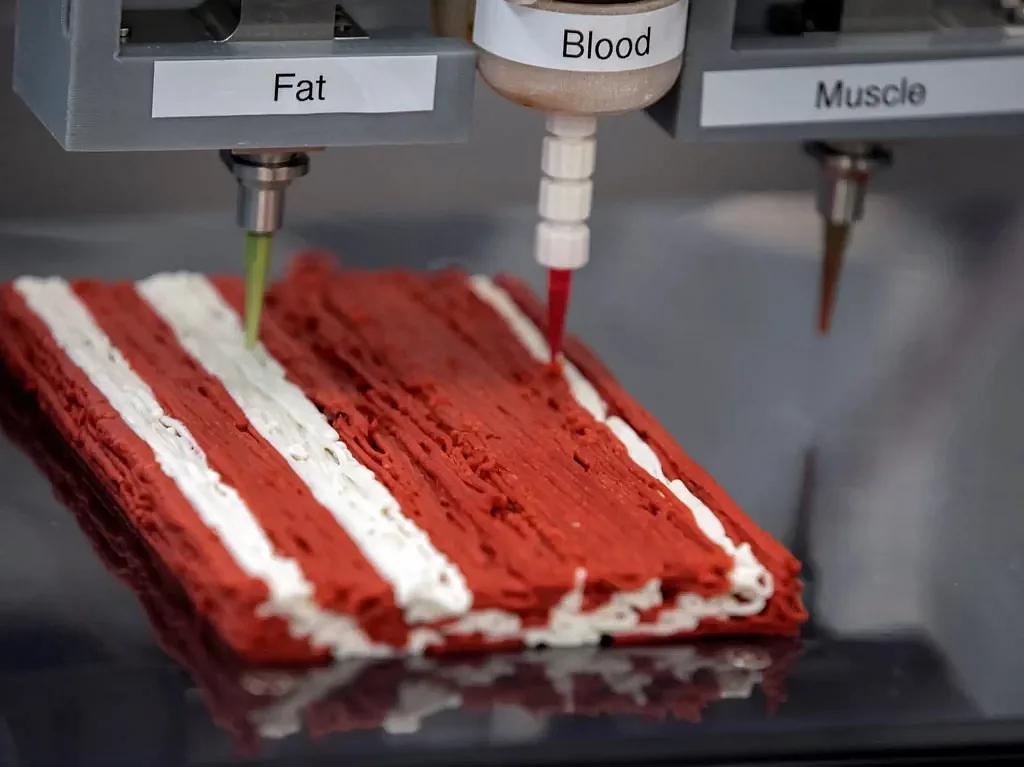
Plant-based meat and fish substitutes made using a 3D printer have gone on sale in U.S. stores. They were developed by Steakholder Foods. As Food & Wine reports, the products mimic meat and fish, but contain no actual meat.
The technology uses special blends of plant-based ingredients to recreate the appearance and texture of meat. This is not the same as lab-grown meat: the latter is grown from real animal cells, while Steakholder Foods products are entirely plant-based.
The company makes the following products:
- steaks, including marbled steak;
- filet mignon;
- chicken breast;
- patties that mimic salmon and white fish.
Marbled steak, for example, is made with soy flour, canola and coconut oils, and beetroot powder.
The Washington Post journalist Emily Heil tried the plant-based substitutes. She bought filet mignon and chicken breast and prepared them according to the package instructions. Neither the taste nor the aroma of the products impressed her.
In Heil‘s view, the filet mignon’s texture was more like ground meat than a whole cut: it was dense, lacked the characteristic meat fibers, and had almost no flavor. A red liquid, presumably meant to imitate meat juices, came out during cooking. But even after being fried, the product still did not seem like real meat to the journalist. Instead of a rich beef flavor, she detected an unpleasant artificial aftertaste.
The plant-based chicken breast also failed to impress the journalist. Heil described its smell as synthetic, its texture as unusual, and its taste as unpleasant. The product also had trouble holding its shape while cooking.
Some questions about the technology concern nutritional value and potential health effects. In 2023, researchers from McGill University and the University of Greenwich published a paper on the potential risks of 3D printing food. They cited the multiple processing stages such food typically undergoes as one of the main concerns.
The researchers warned that ultra-processed foods may pose a health risk. At the same time, the effects of 3D printing on the retention of nutrients in food remain insufficiently studied.