Only 2% of Kyiv schools are fully prepared to operate without electricity
Across the country, 83% of institutions have full or substantial autonomy

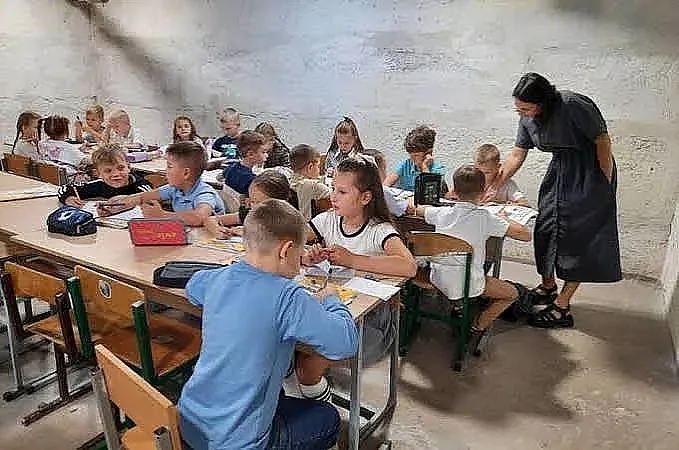
In Kyiv, only around 2% of schools rated their readiness for autonomous operation as complete. Another 23% of schools in the capital reported a high level of readiness. These figures, provided by the schools themselves, were published by the Ministry of Education and Science of Ukraine on mon.gov.ua.
In total, the ministry assessed the readiness of 10,887 general secondary education institutions. Of these, 83% achieved full or high energy autonomy, but there are significant differences between regions: in some, the figures are close to 100%, while in others, they do not cover even half of the schools.
The assessment was based on 5 criteria:
- the ability to operate for more than 8 hours without a centralized power supply;
- availability of an alternative power source;
- autonomous water supply;
- autonomous heating;
- autonomous wastewater disposal.
Institutions meeting 4 of the 5 requirements were considered mostly ready. As for the duration of operation without a centralized power supply, more than 90% of Ukrainian schools exceed the established threshold.
The highest levels of autonomy were found in frontline regions. In particular, autonomous operation can be ensured by:
- 99.3% of schools in Kharkiv Oblast;
- 91.3% of schools in Zaporizhzhia Oblast.
The lowest readiness figures were recorded in:
- Volyn Oblast — 41.6%;
- Chernihiv Oblast — 43.1%;
- Odesa Oblast — 53.3%.
To strengthen schools’ energy resilience, the state has allocated a special subsidy to territorial communities. In 2026, 500 million hryvnias were allocated for this purpose. The funds are being used to install backup power sources, solar power plants, and energy storage systems. Communities are also contributing to the projects by providing funding from local budgets.
Educational institutions are also receiving support from international partners, including through the LEARN program. These include:
- UNICEF;
- the World Bank.
The Ministry of Education and Science emphasizes that installing equipment alone is not enough to ensure schools can operate without interruption. Communities must ensure its ongoing operation:
- organize maintenance;
- provide fuel for generators;
- appoint staff responsible for operating the equipment.
We previously reported:
- Co-working spaces in shelters and shorter lessons: schools prepare for prolonged blackouts
- A solar power plant costing UAH 3.4 million is expected to provide backup power to a Mykolaiv lyceum
- Mykolaiv to receive a boost of 50 generators from international partners
- 16 hours without power, but schools remain open; curfew restrictions are being eased, — Kim on the energy crisis
- Lessons as best they can: how children in the Korabelnyi District study without electricity or internet