365 missiles and drones overnight: Russians struck energy infrastructure, a hospital, and civilians
While the world watches the US elections, Russia is once again shelling Ukrainian hospitals and energy infrastructure.

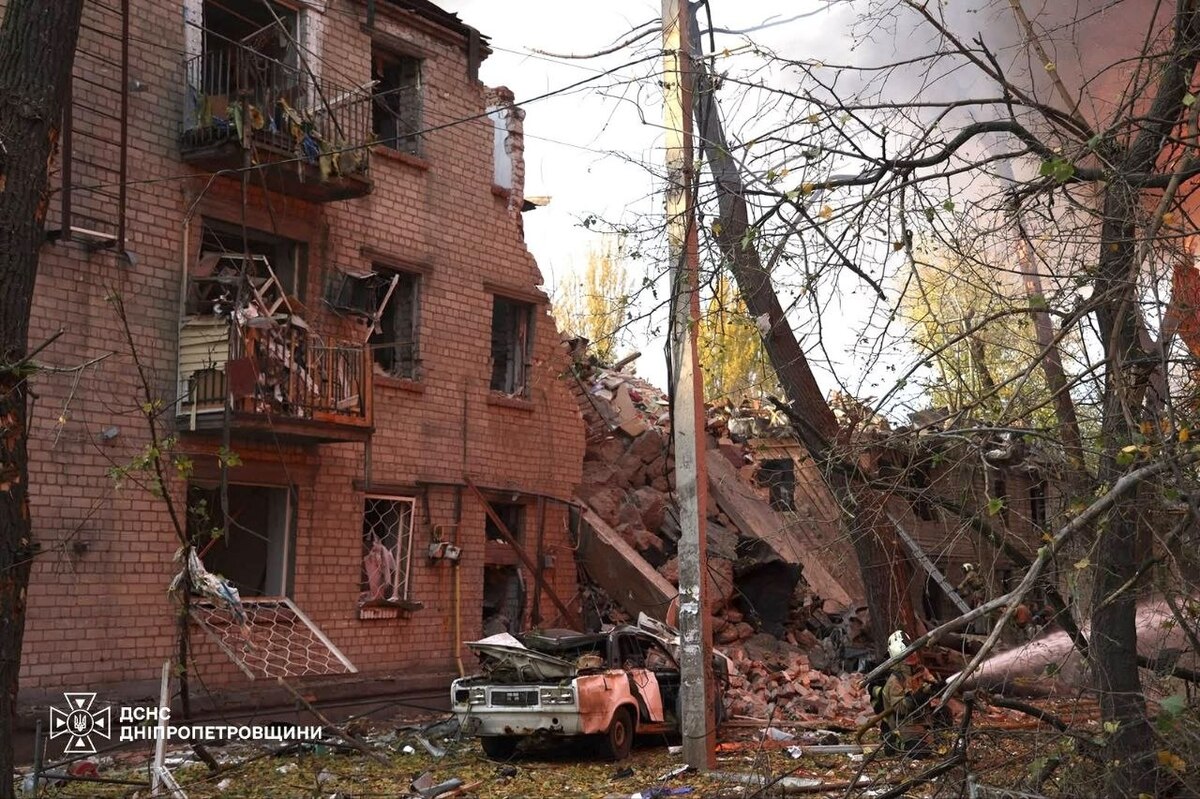
On the night of November 3, 2026, Russia launched a massive, combined-arms attack on Ukraine, employing ballistic and cruise missiles, as well as hundreds of attack drones. The strike targeted critical infrastructure—specifically energy facilities, power generation sites, and substations. At the same time, civilian targets also came under enemy fire: in Kharkiv, a Russian missile struck a city clinical hospital, while in the Zaporizhzhia region, a rescue operation is underway following a strike on Komyshuvakha.
Yuriy Ihnat, spokesperson for the Air Force, spoke about the multiple waves of the missile attack during a national television broadcast. According to him, Russian forces deployed ballistic missiles around 3:00 a.m., followed by cruise missiles closer to morning. The weaponry used included Kh-101 missiles launched from strategic bombers, Iskander-K missiles, and ballistic missiles such as the Zircon, Iskander-M, or KN-23. Additionally, the enemy utilized Kh-59 and Kh-69 guided air-launched missiles.
“The attack unfolded in several waves: the enemy deployed ballistic missiles around 3:00 a.m., and cruise missiles followed closer to morning,” Ihnat stated.
The spokesperson noted that the military had issued prior warnings regarding the preparation for a massive strike. One indicator was the observed activity of Russian strategic aviation at their home airfields. The primary targets tonight were critical infrastructure and energy facilities.
“Tonight, the enemy directed a large number of weapons specifically at critical infrastructure and energy facilities,” the spokesperson emphasized.
According to Yurii Ihnat, the tactics behind Russian attacks have remained largely unchanged: the enemy takes into account the capabilities of Ukrainian air defense, the availability of surface-to-air and air-launched missiles, and weather conditions. Based on this, Russian forces select the directions and flight paths for their missiles. Cruise missiles launched from strategic aircraft—specifically from the Vologda region—enter Ukraine via its eastern regions.
Following the missile strikes, an attack by jet-powered drones ensued. According to the Air Force spokesperson, these drones approached from the north and south—passing through the Odesa, Mykolaiv, and Chernihiv regions—and moved primarily in a westerly direction.
President Volodymyr Zelenskyy reported that, in total, Russia launched 289 attack drones, 17 ballistic missiles, and 59 cruise missiles at Ukraine overnight—a combined total of 365 aerial weapons. Data regarding air defense operations indicate that 309 targets were either shot down or neutralized. At the same time, impacts from missiles and drones were recorded at 23 locations.
According to the Head of State, the primary target of the Russian attack was energy infrastructure, including power generation facilities and substations. The strikes targeted the Odesa, Cherkasy, Zhytomyr, Vinnytsia, Kharkiv, Dnipropetrovsk, Chernivtsi, Chernihiv, and Rivne regions. In many cities and communities, emergency power outages remained in effect following the attack.
Separately, Volodymyr Zelenskyy reported a strike on a city clinical hospital in Kharkiv. According to him, 73 people were affected, and the cardiology department—where patients were present—sustained damage.
Meanwhile, a rescue operation that began the previous day is ongoing in Komyshuvakha, Zaporizhzhia region. The death toll from the Russian strike has risen to 29, with another five people injured. According to the President, people may still be trapped under the rubble. Rescuers are continuing their work while remaining mindful of the threat of further Russian strikes.
Volodymyr Zelenskyy also noted that this massive attack took place on the day of the U.S. Congressional elections. He urged international partners not to overlook these Russian strikes and to continue assisting Ukraine in strengthening its air defense systems.
At the time of the President’s statement, the air raid alert was still in effect, and the threat of further missile and drone attacks persisted. Previously:
Mykolaiv region: no shelling over the past 24 hours; Kyiv: emergency power outages
Russia strikes energy infrastructure: hourly power outages introduced in several regions
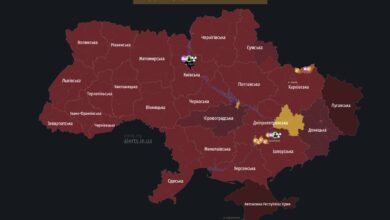
Where are the missiles and drones heading? A map has been added to the “Air Alert” app
Massive attack on the Mykolaiv region: guided aerial bombs, Shahed drones, Iskander missiles, and “Banderoli”
Over 300,000 without power: Russians strike Mykolaiv region’s energy infrastructure with Shahed drones