Stolen grain bound for Syria: captain’s actions classified as a war crime in Ukraine for the first time
The captain of the Russian vessel MATROS POZYNICH received an in absentia notice of suspicion


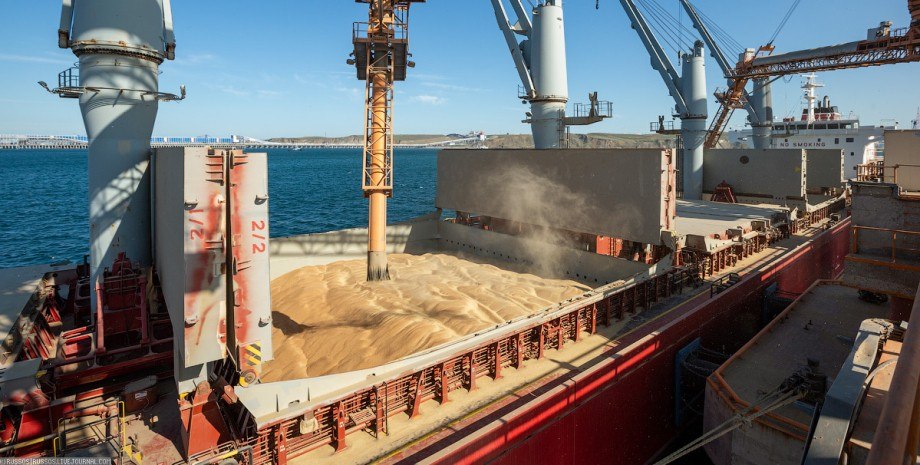
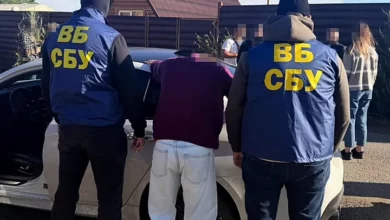
The captain of the Russian vessel MATROS POZYNICH has been charged in absentia with a war crime for transporting more than 54,000 tonnes of stolen Ukrainian wheat to Syria. The case was reported by the Office of the Prosecutor General. According to gp.gov.ua.
The investigation established that the shipments took place in November 2022 and January 2023: the captain transported the grain from occupied Sevastopol to the Syrian port of Latakia. The Russians stole the wheat from temporarily occupied territories of Ukraine and then passed it off as Russian-produced goods.
According to the Security Service of Ukraine, the route was concealed by switching off the vessel’s automatic identification system, AIS. The captain also provided false information about the vessel’s location.
Acting Prosecutor General Anton Kovalskyi explained the significance of the case in establishing the legal basis for assessing such shipments:
“For the first time in Ukraine, a legal approach has been developed and applied in practice that makes it possible to classify a vessel captain’s participation in transporting grain illegally seized in occupied territory as a war crime,” said Acting Prosecutor General Anton Kovalskyi.
According to him, the significance of this case goes beyond charging a specific captain. To hold those involved accountable, investigators must prove the grain’s origin, the circumstances of its theft and transportation, and each participant’s role. The official also stressed that occupation does not give Russia the right to appropriate Ukrainian property and resources.
Evidence in the case was gathered by:
- prosecutors from the Office of the Prosecutor General;
- investigators and operations officers of the Security Service of Ukraine;
- international experts.
The SSU said it is continuing efforts to hold the captain accountable and identify other participants in the scheme.
The transportation of stolen grain is also an issue on European transit routes. Recently, leaders of the European Union called for preventing grain that Russia transports from temporarily occupied territories of Ukraine from being exported through the territory of the EU.
Latvia has already stepped up inspections of grain shipments from third countries to prevent grain stolen by the Russians from occupied Ukrainian territories from being transported through its territory. Earlier, the country banned imports of Russian and Belarusian agricultural products and animal feed. Separately, on September 24, the Latvian parliament, the Saeima, called on the government to develop rules to stop the import and transit of Russian and Belarusian grain.
Latvia’s parliament explained that restrictions on Russian shipping in the Black and Azov Seas have led the Russian Federation to reroute some of its grain transit through the Baltic region. Ukrainian officials warn that this route could be used to transport grain stolen in Ukraine.
In 2025, Russia stole about 2 million tonnes of Ukrainian grain and sold it in Africa, Asia, the Middle East, and Europe.
We previously reported:
- A vessel carrying stolen Ukrainian grain entered Israel: Kyiv is preparing sanctions against carriers and buyers
- Millions of tonnes under cover: how the Russians sell stolen grain from Ukraine
- A vessel on the National Security and Defense Council sanctions list detained in Ukraine: seven illegal calls at ports in Crimea
- Moscow stole more than 4 million tonnes of Ukrainian grain
- A vessel from Russia’s “shadow fleet” detained: it transported grain from occupied Crimea across the Black Sea