For the first time in 50 years: the Orion capsule of the Artemis II mission splashed down after a lunar flyby
At 03:10 Kyiv time, a 10-day journey ended, during which the crew set a record for the greatest distance from Earth

On the night of 11 April the capsule of the Artemis II mission successfully completed a 10-day flight around the Moon and splashed down in the Pacific Ocean near San Diego; the landing occurred at 03:10 Kyiv time.
NASA confirmed that during the final phase of descent the spacecraft deployed several parachutes, which provided stabilization and a soft splashdown.
As Sky News notes, a critical operation to separate the crew module from the service module took place before the splashdown. The latter then deorbited and burned up in the dense layers of the atmosphere. At an altitude of about 120 km the Orion spacecraft entered the atmosphere, surrounded by superheated plasma generated by aerodynamic friction.
After the modules separated, the heat shield took on the load — it protected the crew from extreme temperatures of up to approximately 1600 °C. Once the hottest portion of the trajectory was behind them, the cover of the capsule’s upper section was jettisoned, allowing the parachute system to deploy and finally slow the descent.
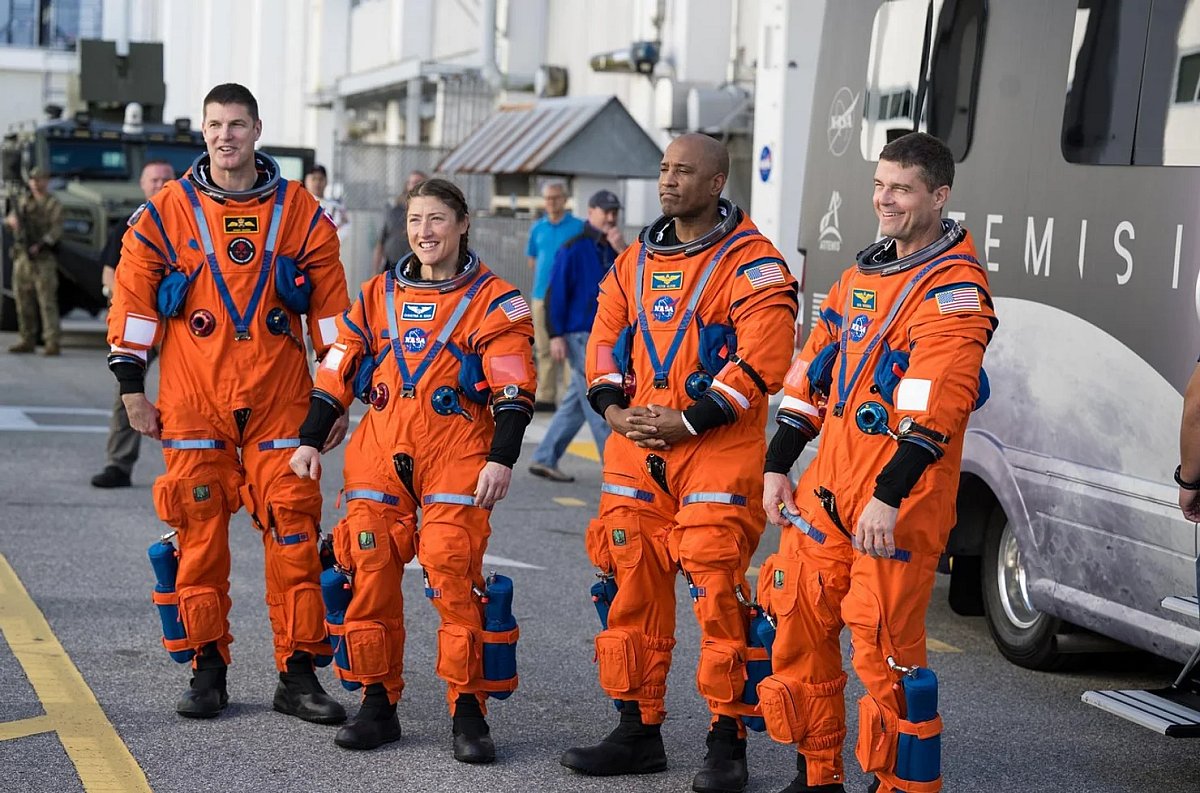
The flight launched on the night of 2 April, when NASA sent people to the Moon for the first time in more than 50 years. The crew included astronauts Reid Wiseman, Victor Glover, Christina Koch and Canadian Space Agency representative Jeremy Hansen.
Already on 3 April the spacecraft left Earth orbit after a successful main engine burn and set course for the Moon. That same day mission members released a picture of Earth that echoes the legendary image taken by the Apollo 8 crew.