At Least 62 Attacks: Russia Targets the Food Industry and Shuts Down Factories
Thousands of tonnes of oil damaged in storage tanks in Mykolaiv region


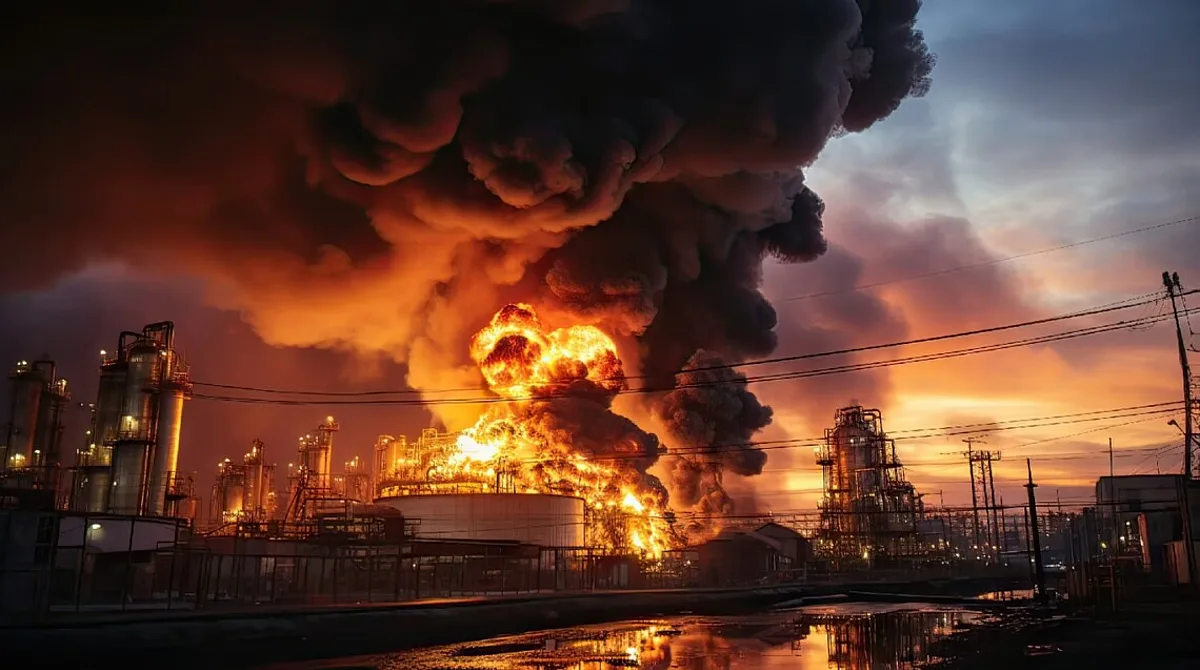
Since the beginning of 2026, Russia has carried out at least 62 attacks on food production facilities, food and refrigerated warehouses, and logistics centers in Ukraine. The tally, cited by the Ministry of Defence of Ukraine, is almost twice the number of such strikes recorded over the entire period from 2022 to 2025. The affected regions include Mykolaiv Oblast.
The statistics are based on company statements and media reports. The actual number of attacks may be higher, as information about some of the facilities hit is not made public for security reasons.
On November 10, a source at the Main Directorate of Intelligence told the Ukrinform news agency that Russia was preparing to strike the following facilities:
- grain elevators;
- grain warehouses;
- oil and fat plants;
- dairy plants;
- meat processing plants;
- poultry farms.
The source said that Russia intended to undermine Ukraine’s food security and damage its economy.
On November 12, Viacheslav Chaus, head of the Chernihiv Regional Military Administration, published separate statistics on the region’s agricultural sector: since the beginning of the year, more than 100 hits have been recorded on farms and agricultural businesses across the region.
Throughout November, Russian attacks damaged production facilities and product stocks. Businesses also suspended operations due to power outages and the risk of further strikes. Specific cases include:
- Kernel’s plant in Mykolaiv Oblast. The November 12 attack damaged four tanks holding around 8,500 tonnes of sunflower oil. The spill covered more than 3,500, although the unit of measurement is not specified in full in the cited data. That same day, the agricultural holding announced it was shutting down all eight of its oil extraction plants and suspending seed purchases.
- Oleyina plant, owned by international company Bunge, in Dnipro. After a Russian attack in January, around 300 tonnes of oil spilled onto the city’s roads. A September strike killed two people, after which the facility halted operations. On November 16, the plant was attacked for the third time that year. Some production facilities were damaged, but no workers were injured.
- Korolivskyi Smak facility in Kirovohrad Oblast. Three days before the strike, the manufacturer announced that it was shutting down its plants due to unstable power supplies and the threat of further attacks. On November 16, Russian drones attacked the facility. One person was killed. Firefighters battled the blaze throughout the night; it destroyed products, equipment, and production buildings. On November 17, the company said it was not currently possible to resume operations.
- Kremenchukhlib Plus and Skovoroda Plus in Kremenchuk. Both manufacturers suspended operations on November 17. Management cited persistent power outages and the threat of missile and drone strikes. No date for resuming operations has been announced.
Civilians and food supplies are protected under international humanitarian law during armed conflicts. In particular, Additional Protocol I to the Geneva Conventions includes the following provisions:
- Article 52 prohibits attacks on civilian objects;
- Article 54 protects food supplies and other objects essential to the civilian population’s survival, and prohibits using starvation as a method of warfare.
Under the Rome Statute of the International Criminal Court, intentionally attacking civilian objects and using starvation of civilians as a method of warfare may be classified as war crimes.
We previously reported: