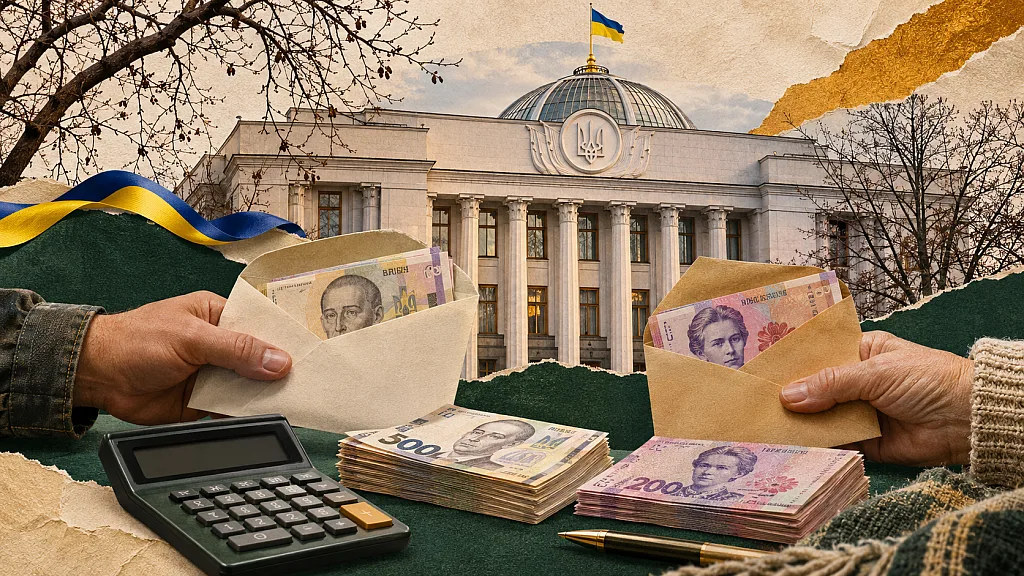
The Cabinet of Ministers of Ukraine has approved an updated draft state budget for 2027, which will be submitted to the Verkhovna Rada for consideration at the second reading. The document drops the planned increases in VAT rates and excise taxes, revises projected revenues, and adds funding for defense, education, and other areas. The proposed tax increases were removed because they did not receive parliamentary support.
The changes to the draft were described by MP Roksolana Pidlasa on her Facebook page.
Compared with the previous version, the forecast for the state’s own revenues, excluding grants, has been reduced by UAH 49 billion. The calculations no longer include the UAH 67 billion expected from higher tax rates, or nearly UAH 65 billion in projected revenue from efforts to bring customs operations out of the shadow economy.
As Roksolana Pidlasa explained, in 2026 the customs service failed to exceed its overall payment target, so no additional revenue from this area is being included for now. If the target is exceeded in 2027, the surplus revenue will go toward the defense reserve program.
At the same time, forecasts for other revenue sources have been increased:
- National Bank of Ukraine profit — an additional UAH 36.3 billion compared with the version before the first reading; at least UAH 85 billion in total is expected to be transferred to the budget;
- personal income tax and the military levy — an additional UAH 25.7 billion;
- royalties for the use of subsoil resources of national importance — an additional UAH 14 billion;
- import duties — an additional UAH 2.1 billion.
The amount of external financing required by Ukraine remains unchanged at $52.6 billion. A further €45 billion in assistance from the European Union can be included in the budget only after an official decision by the European Council. The decision is expected around June 2027.
The revised draft provides for the following increases in spending:
- an additional UAH 30 billion for war-risk insurance: instead of the initial UAH 1 billion, UAH 31 billion has been allocated to this area;
- UAH 20.4 billion to support the Armed Forces of Ukraine, primarily for military personnel’s pay;
- UAH 2 billion to purchase weapons for the Armed Forces of Ukraine;
- UAH 13.4 billion for the Reserve Fund, bringing its total to UAH 105 billion;
- UAH 2 billion for a pilot reform of the teacher pay system, which schools can join voluntarily;
- UAH 1.3 billion in subsidies for building shelters in schools and kindergartens;
- UAH 1 billion for the CampeX initiative to create a network of Centers of Excellence at state universities;
- UAH 970.7 million for research institutions of the National Academy of Sciences;
- UAH 801.9 million to support veterans and their families;
- UAH 717 million for housing for orphans;
- UAH 800 million for the agricultural sector, including UAH 600 million for agricultural producers and UAH 200 million for farm loans;
- UAH 536 million in additional payments for workers in the fuel and energy sector, housing and utilities, and the railway who are restoring services after shelling-related damage;
- UAH 450 million for the purchase of medicines.
The Ministry of Economy is also seeking an additional $2–3 billion from international partners for war-risk insurance. Those eligible to claim compensation for losses caused by such risks will include shipowners, operators, and charterers.
The education section also introduces changes to how funds are allocated. For the first time in many years, the subsidy for January–August 2027 has been set out directly in an annex to the budget law. The government will allocate funding for the rest of the year in a separate decision.
The Cabinet of Ministers will also decide how to use the unspent education subsidy funds from 2026. The proposed allocations include:
- UAH 500 million for energy independence at vocational pre-higher and higher education institutions;
- UAH 400 million for dormitories and boarding facilities at residential schools;
- the remaining funds for the education sector’s day-to-day needs.
Separate changes concern agricultural support: the maximum reimbursement for the costs of building and renovating livestock farms is set to increase from 50% to 75% of the project cost.
Funding for cashback had previously been linked to a reallocation of business support funds. Under the special fund of the state budget for 2024, the government redirected funds from business development and demining to the “National Cashback” program and the winter “eSupport” program. That reallocation amounted to UAH 3.8 billion.
However, the 2027 draft does not provide for “National Cashback” payments funded through the business support program. The state has promised to settle outstanding payments to participants for May–December 2026.
The government is also expected to be instructed to review, during 2027, legislation linking other payments and indicators to the subsistence minimum or minimum wage. This link is to be removed in the future so that increases in social standards do not automatically drive up salaries in government agencies. Another planned instruction is to optimize staffing levels in executive government bodies.
The parliamentary committee is expected to consider the draft at the end of next week. The Verkhovna Rada is scheduled to vote on the budget at the second reading on December 9.
We previously reported:
- Funding falls short: Ukraine postpones construction, repairs, and urban improvement projects
- Cabinet spends 78% of state budget’s Reserve Fund in three months
- +30% for teachers: Cabinet decides to “sweeten” 2026 🍎
- Parliament adopts 2026 budget: record deficit, higher social benefits, and an exchange rate of 45.7 to the dollar