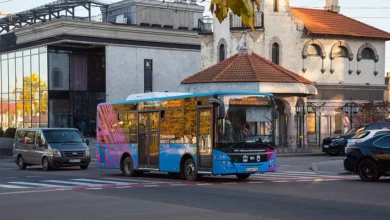
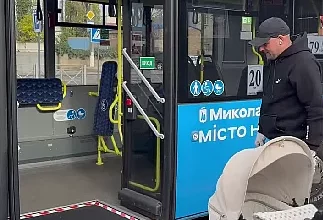
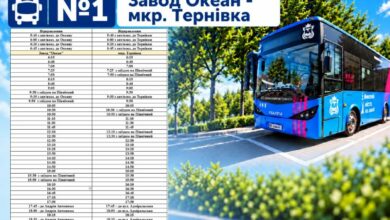
Mykolaiv and Kherson are the only two of 22 cities where municipal buses accept cash only
An electronic ticket was planned to be introduced in Mykolaiv as early as 2016


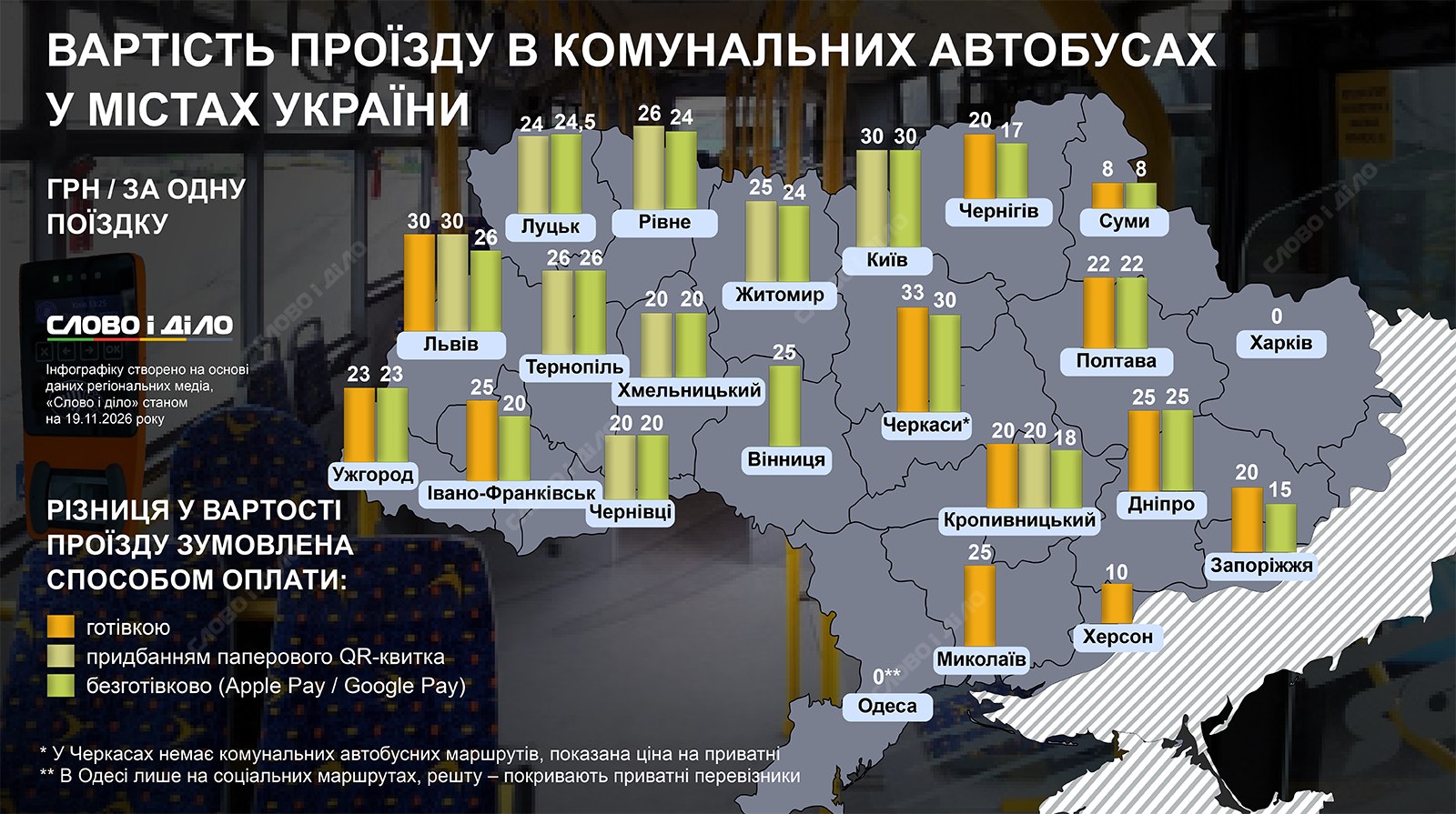
Cash remains the only way to pay for rides on municipal buses in Mykolaiv and Kherson. Of the 22 cities compared by Slovo i Dilo, nowhere else is there such a restriction. This is shown in an infographic with fares and payment methods as of November 19.
For passengers in Mykolaiv, this comes against the backdrop of a fare increase: since November 14, city minibuses and buses operated by Mykolaivpastrans have charged 25 hryvnias per ride. The fare is the same in Dnipro and Ivano-Frankivsk, but both cities also offer cashless payment.
In most other regional centers, passengers can use a card, Apple Pay or Google Pay, or buy a QR ticket. In some places, choosing a cashless payment method also reduces the cost of a ride.
By contrast, municipal buses in the following 8 cities do not accept cash at all — passengers use bank or transit cards, smartphones, or paper QR tickets:
- Kyiv;
- Vinnytsia;
- Lutsk;
- Rivne;
- Ternopil;
- Zhytomyr;
- Khmelnytskyi;
- Chernivtsi.
The fare differences by payment method in the comparison are as follows:
- Ivano-Frankivsk — a cashless ride costs 20 hryvnias, less than the regular fare.
- Zaporizhzhia — 20 hryvnias in cash and 15 hryvnias via Apple Pay or Google Pay. The article notes that this is the largest difference.
- Lviv — passengers pay 30 hryvnias in cash or with a paper QR ticket, and 26 hryvnias cashlessly.
- Chernihiv — 20 hryvnias in cash compared with 17 hryvnias cashlessly.
- Kropyvnytskyi — 20 hryvnias and 18 hryvnias, respectively.
- Cherkasy — private carriers charge 33 hryvnias in cash or 30 hryvnias cashlessly. The city has no municipal bus routes.
The highest fares among the cities compared are in Cherkasy, Kyiv, and Lviv, while the lowest are in Sumy and Kherson. In Kharkiv, municipal transport has been free to use since May 2022. In Odesa, passengers do not have to pay on routes run by the city council, while private carriers charge 25 hryvnias.
Mykolaiv first planned to introduce an electronic ticket back in 2016. Since then, the city authorities have repeatedly promised to implement the idea. In particular, the following steps and statements were made in 2018:
- Mayor Oleksandr Sienkevych instructed officials to launch the e-ticket as soon as possible.
- The city signed a memorandum with Visa on a pilot project.
- The then head of the Transport Department, Oleh Manushevych, promised that the system would be up and running by the end of the year, including on minibuses.
However, the promised launch never happened. Nor did the presentation of new projects in 2020 lead to its implementation.
Discussions resumed this fall. In September, Oleksandr Sienkevych explained that an electronic ticket would allow passengers to transfer from a bus to a trolleybus without paying again. The city council’s relevant committee instructed the Transport Department to prepare cost estimates.
In late October, Oleh Kuksa, deputy head of the Transport Complex Department, told city council members that the cost would be 2.23 billion hryvnias. Yesterday, November 24, the city administration acknowledged that this estimate was incorrect.
According to Oleh Kuksa, the developer mistakenly stated the amount in dollars, after which the department converted the quoted figure into hryvnias. In fact, introducing the system for 223 municipal buses, trams, and trolleybuses is estimated to cost about 50 million hryvnias.
We previously reported:
- Mykolaiv residents will have to pay more: executive committee approves new transport fares
- Nearly 1.5 million payments: Mykolaiv residents are switching en masse to QR tickets on electric transport
- “It’s expensive”: Sienkevych has promised a single transport ticket for years, but hasn’t gone beyond promises
- Civilization has reached Mykolaiv too: you can now pay for your ride contactlessly!
- The Antimonopoly Committee found Mykolaiv City Council’s introduction of the “electronic ticket” to be anticompetitive