In Lviv, a man was forcibly put into a car, and a member of the alert group drew a weapon
The incident involving a territorial recruitment center, the police and civilians is being investigated by the State Bureau of Investigation (DBR)


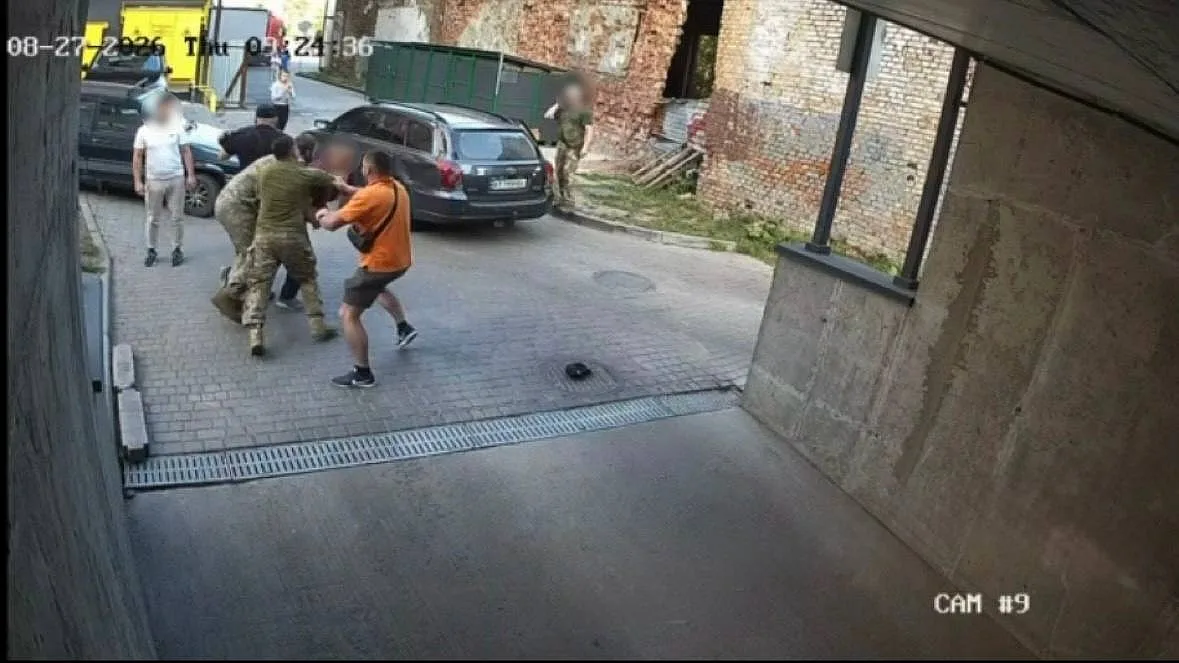
During mobilization measures in Lviv, a conflict occurred between civilians and people in military uniform, who were initially identified as representatives of TCK and SP. One member of the notification group produced a service weapon. A pre-trial investigation was launched into the incident.
The Commissioner of the Verkhovna Rada of Ukraine for Human Rights, Dmytro Lubinets, said he reviewed video footage of the incident. The released clips reportedly show people in military uniform using force against civilians, and one man being forcibly put into a car.
At one point a member of the notification group draws a weapon and appears likely to intend to use it. In the ombudsman’s view, such actions require legal assessment. At the same time, the final circumstances of the conflict and the lawfulness of the behavior of all participants must be established during the investigation.
The ombudsman’s representative Vitaliy Nikulin reported a possible criminal offense to the Office of the Prosecutor General. Information was entered into the Unified Register of Pre-Trial Investigations (ЄРДР) under part 2 of Article 365 of the Criminal Code of Ukraine — possible abuse or exceeding of power or official authority involving the use of a weapon.
The case is being investigated by the Territorial Department of the State Bureau of Investigations in Lviv. The prosecutor’s office later clarified that the incident occurred on 27 August 2026. The participants included representatives of TCK and SP, police officers and civilians. Law enforcement are clarifying all circumstances and must provide a legal assessment of the actions of each participant.
Dmytro Lubinets also stressed the need to introduce clearer procedures for conducting mobilization activities, to mandatorily record participants’ actions, and to provide for liability for violations.
Earlier we wrote: