Bloody Easter in Mykolaiv in 1899: "guest workers" from Russia became the main force of the riots
Cossacks, martial law and mass arrests: how the authorities tried to stop the three-day pogrom in Mykolaiv


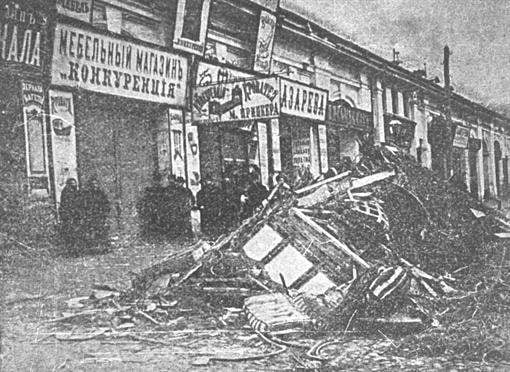
At the end of April 1899 in Mykolaiv, which at that time was rapidly growing and had about 100,000 inhabitants, of whom roughly 30,000 were Jews, large-scale pogroms broke out. In the text “The Jewish Pogrom in Mykolaiv” the events are described day by day — from the crowd on the square to open looting, and by the morning of April 21 the city was already under martial law.
The events unfolded on Easter and lasted three days — from petty hooliganism to mass looting. The city literally plunged into panic: shops closed, banks did not operate, the streets were patrolled by the military, and Jewish families massively relocated to hotels to escape further attacks.
“In Mykolaiv — 100,000 inhabitants, of whom 30,000 were Jews — a pogrom broke out.”
Even before the mass unrest began the atmosphere in the city was tense. Ahead of the holidays the authorities even posted notices banning gatherings, and wealthy Jewish communities tried to “insure” themselves against pogroms with charity — organizing meals for the poor. But this time it did not help.
“So that the ‘lesser brethren’ would feel somewhat better during these days, meals are organized for the ‘bums’… This is, so to speak, insurance against pogroms. This year the insurance did not help.”
After the first rumors of disturbances the city changed instantly: windows were closed with shutters, icons appeared in doorways and on facades, people stocked up on food and were afraid to go out into the streets.
“As if the plague were in the city! It breathes sorrow, dejection, panic.”
Day One: the “entertainment” begins
The pogroms started on April 19 — the second day of Easter. It all began with supposedly “innocent” hooliganism: small groups of a few people began smashing soda stalls on the outskirts.
“Separate groups, about five people, began to overturn the booths… with shouting, howling, laughing they overturned a booth and went on.”
That same day at Sennaya Square youths began throwing stones at Jews, smashing their faces. However, the authorities did not react — no one was detained, and the city calmly fell asleep, unaware that this was only the beginning.
“No one was arrested… no one saw the beginning of the pogrom.”
Day Two: a crowd of 5,000 and a systematic pogrom
By the morning of April 20 the situation sharply escalated. On Sennaya Square a crowd of about 5,000 people gathered, and it was here that visiting workers — natives of the Oryol Governorate who worked in the city — played a key role.
“The majority consisted of transient people… peasants from the Oryol Governorate… In all the disorders these Oryol men were in the ‘first ranks’.”
Despite the presence of the police and 150 Cossacks, the authorities were powerless. Initially the crowd did not act aggressively, but by around noon a massive smashing began.
“The crowd was completely sober… but a small group began to smash a Jewish shop… The crowd became agitated.”
After that the crowd split and moved down different streets, choosing mainly Jewish neighborhoods. Stones for the attacks were taken directly from the construction supplies for the paving.
“The crowd was instantly armed… the crowd carefully selected Jewish houses.”
They destroyed everything: windows, doors, furniture, goods. Shops were smashed on signal.
“— Guys, stop, the shop!”
At the same time, the pogroms often had the character of cruelty and mockery rather than outright murder — people were beaten, but not always brutally.
“It was more like mockery of the defenseless.”
Day Three: open looting
On the third day — April 21 — the pogrom escalated into mass marauding. From the morning the crowd deliberately went to loot the market.
“The crowd gathers precisely for looting… ‘let’s go smash the shops!’”
People came prepared: they put on several layers of clothing to carry out more goods.
“Three, five, even eight shirts… one on top of another, six jackets, five pairs of trousers.”
Some appeared so overloaded with stolen goods that they could hardly move.
“’The layered gentleman’ could barely walk.”
Women also took part in the looting, hiding fabrics, clothes and goods under their outer garments.
When the troops intervened, the crowd was dispersed and some of the participants were detained.
New wave: carts with looters
The next day, April 22, new groups of marauders from the surrounding villages began arriving en masse — in particular from Bogoyavlensk, Kalinovka, Gorokhovka, Vodopoi.
“These were ‘townsfolk’ from Kalinovka, from Gorokhovka, from Bogoyavlensk — whose residents are considered desperate cutthroats and ready to plunder at any time of day and night, from Vodopoi, famous for its horse thieves.”
Even after this, as the source notes, they did not leave empty-handed: they vented their anger on the Jewish cemetery they passed by — they smashed the watchman’s house and mutilated many monuments. At the end of the text it is stated that about 400 arrested people were held in Mykolaiv’s two prisons — the city and the naval ones.
Consequences: ruins, fear and hundreds detained
In three days in Mykolaiv dozens of districts were destroyed, at least 79 sites were affected, and damages reached about 300,000 rubles. Around 400 people were arrested, more than 20 people sustained serious injuries, and one person was killed.
The city looked as if after a natural disaster: broken windows, smashed stalls, glass and stuffing in the streets.
“As if some hurricane had swept over the city.”
Despite the scale of the violence, eyewitnesses emphasized — the crowd was sober, and the pogrom itself often had the character of chaotic “entertainment” and derision.
“The crowd was disgraceful, but not drunk.”
This is one of the darkest pages in the history of Mykolaiv. And if one sets aside later retellings, even the contemporary account of those events provides plenty of chilling details: arrivals from the Oryol Governorate, lads from Bogoyavlensk, the crowd near Sennaya Square, the shouts “let’s go smash the shops!”, shirts “in case of the Cossacks”, carts with sacks and the looting that no one attempted to hide anymore.
- History of the Vitovka‑Bogoyavlensk‑Zhovtneve churches (PHOTO)
- 620 years ago on the site of the modern Korabelny district of Mykolaiv Prince Vitovt founded a customs house
- Without memory the spring dries up… About a place of power and strengthening of the spirit in the “Bogoyavlensky” park
- “The armored train stopped at Kulbakine station and began …
- The couple from the Mykolaiv region who saved a Jewish family during the Second World War were awarded a lifelong scholarship