Ukrainian drones struck a Russian "T-junction", seriously disrupting the flow of Siberian oil
"A Landmark in the Glow": birds of the Ukrainian Armed Forces turned Russia's oil ports into beacons

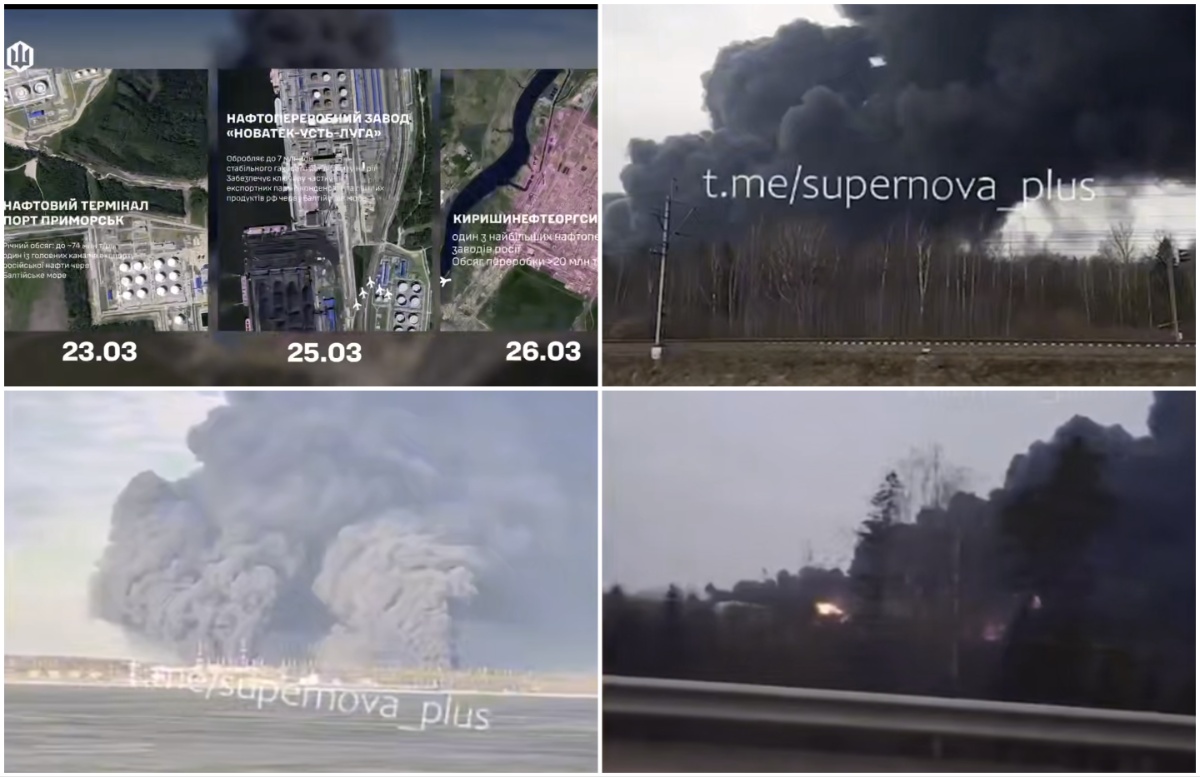
Commander of the Armed Forces of Ukraine’s Unmanned Systems Forces Robert Brovdi (call sign “Magyar”) 26 March 2026 reported a series of strikes on Russia’s oil infrastructure in the Baltic region. This concerns the so-called “oil triangle” — Primorsk, Ust-Luga and Kirishi, which supplies exports of crude via the Baltic Sea.
According to him, between 23–26 March Ukrainian forces inflicted comprehensive strikes on key nodes of this logistics system. As a result, there were disruptions in the transshipment and transportation of oil, and large fires were recorded at the facilities.
In particular, on 23 March the terminal in Primorsk was shut down. On the same day the terminal in Ust-Luga, which had previously also been attacked, partially resumed operations. However, already on 25 March this facility was struck again and caught fire. The next day, 26 March, the Kirishi Oil Refinery was hit; it is one of the largest in the region and plays a key role in processing Siberian crude for subsequent shipment to ports for export.
According to Brovdi, strikes on these three facilities effectively created a “bottleneck” in the enemy’s oil logistics. This complicates exports and, accordingly, reduces revenue that Russia uses to finance the war against Ukraine. The operation was carried out by deep-strike units of the Defense Forces of Ukraine, notably involving unmanned systems and in coordination with the Security Service of Ukraine. The consequences of the strikes are still being clarified.
Note: previously we wrote:
- Russian ports in the Baltic stopped oil shipments due to attacks by Ukrainian drones
- Strikes on refineries in the Russian Federation and ‘Shahed’ depots in Donetsk: the Armed Forces of Ukraine carried out a series of strikes on New Year’s night
- Night of explosions: the Defense Forces of Ukraine destroyed enemy air defense systems in Crimea and struck the Saratov refinery
- The Russian oil empire is burning: the Armed Forces of Ukraine hit the Saratov refinery and a terminal in Feodosia
- Ukrainian-style sanctions: the Armed Forces of Ukraine imposed a “fiery regime” on Russian refineries