Comprehensive overhaul of mobilization: what the Verkhovna Rada and the Ministry of Defense are preparing
Behind the scenes, a new architecture for mobilization processes is being formed to make the system clearer and more efficient


While officials in Kyiv call for calm, behind the scenes in the Verkhovna Rada and the Ministry of Defense work is in full swing on a new architecture of mobilization processes. In the spotlight are a million “invisibles”, a review of strategic enterprises and a tough crackdown on schemes of fictitious employment.
Identification code as the key to record-keeping
Two years after the large-scale overhaul of mobilization legislation, the state has encountered a systemic challenge. According to sources in parliament, about 1 million men still have not updated their data in the registers. These people have effectively fallen out of the legal field, creating a disproportionate burden on those who conscientiously remain registered.
“The situation in which a million citizens are in the ‘gray zone’ can no longer be ignored. These people will become priority number one for the supervisory authorities in the coming months,” a source in the Verkhovna Rada notes.
The main tool for “bringing them out of the shadows” is expected to be the identification code. It is envisaged that its integration into all state registers will allow the Ministry of Defense to see the real picture of employment and movements of those liable for military service in real time. This is not just digitization; it is the creation of a “digital twin” of the conscript, where any interaction with the state or a bank is automatically checked against the status in the “Oberig” system.
The end of the era of “weekly” employees
Lawmakers have paid particular attention to critically important enterprises. The reservation system, which was supposed to protect the economy, has become a loophole for abuse. TSN.ua stresses: mass cases of “fictitious deployments” to factories have been identified.
The scheme is simple: a person is hired by an enterprise, receives a reservation, and a week later quits, formally retaining the reserved status in databases due to bureaucratic delays in reporting.
What will change? A mechanism of “dynamic confirmation” is being introduced. If an employee leaves, the cancellation of the reservation should occur within 24 hours automatically via synchronization with the Pension Fund registers.
An audit of reserved positions is planned to determine whether a given sector really needs that number of reserved specialists.
“We must find a balance between the ‘economic front’ and the real trenches. If an enterprise claims critical importance, it must prove it not only on paper but also through a real contribution to GDP and defense capability,” the defense ministry comments.
The problem of unauthorized leaving of units (SЗЧ): between strict control and seeking motivation
One of the most sensitive topics discussed behind the scenes in the Verkhovna Rada remains unauthorized leaving of units (SЗЧ). If at the start of the full-scale invasion these were isolated cases, by 2026 the scale of the problem forced legislators to seek new, tougher deterrent mechanisms.
According to parliamentary sources, a package of amendments is being developed that not only increases responsibility but also introduces a system of a “digital trace” for servicemembers. This involves synchronizing Ministry of Defense data with banking institutions and the border service in real time.
“The issue of SЗЧ is not only a matter for the criminal code; it is a matter of fairness toward those who remain in the ranks. We are discussing mechanisms that will make illegal absence from a unit economically and socially impossible,” explains an interlocutor from the parliamentary committee on national security.
However, military experts and psychologists insist that tightening the screws alone will not solve the problem. Alongside punitive measures, the introduction of clear rotation and demobilization timelines is being discussed. Journalistic analysis shows that the main cause of SЗЧ remains physical and psychological exhaustion. Thus, strict mechanisms can only be a temporary bandage on the deep wound caused by the lack of systematic personnel rotation.
Deep reform of TCC
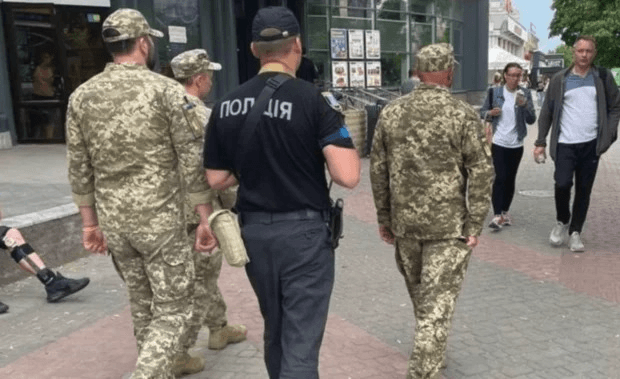
Scandals over “hard mobilization” on city streets became a major tool of enemy propaganda and caused serious public outcry. Kyiv officially states that the operating mode of the TCC (Territorial Recruitment Centers) remains unchanged, but a deep reform is being prepared behind closed doors.
Main vectors of transformation:
Abandonment of forceful methods: The priority is a shift to targeted work through digital notifications and phone calls.
Recruiting instead of coercion: TCCs should become career centers where a volunteer can choose a specialty — from a UAV operator to IT support — based on their civilian skills.
Transparency: Implementation of video surveillance and body cameras for TCC employees during document checks to minimize conflict situations.
“A system built on fear is ineffective in the long term. We need a systemic and transparent mechanism of interaction with those liable for military service, where everyone understands their rights and obligations before they even step into a center,” the Ministry of Defense emphasizes.
How much does “reservation” cost the country?
Returning to the question of reservations, one cannot ignore the deep personnel shortage in the civilian sector. According to industry associations, the deficit of qualified personnel in energy and construction has reached critical levels.
The proposed revision of reserved persons is the state’s attempt to “recount the cartridges” in the economy. An analysis of the real needs of sectors will show who is truly holding the rear and who is using enterprise status as a shield against mobilization.
Experts’ forecasts are as follows: the list of “critical” enterprises may be reduced by 15–20% by mid-year. In addition, it is planned to introduce a coefficient of labor contribution for reserved employees — their contribution to taxes and production must be documented.
Mobilization 2.0 as a social contract
The changes being prepared in Ukraine are not just a change of accounting rules. They are an attempt by the state to reboot the social contract under conditions of prolonged conflict. The use of identification codes, digitization of reservation and reform of TCCs are intended to make the process as predictable as possible.
However, the success of these measures depends on whether the authorities can persuade citizens of their fairness. As long as some look for ways to bypass the system while others bear the main burden of defense, social tension will grow. New control mechanisms are only tools. The primary goal remains the creation of a system where the mobilization resource is not numbers in reports but people provided with state support at all stages of service.
Earlier we wrote:
- TCC officer detained for receiving $20,000 for issuing a reservation
- “No TCC patrols on the streets”: Is the state changing mobilization rules from 2026?
- Fictitious “reservation” for $6,500: documents were sold in Mykolaiv to evade mobilization
- Didn’t go to the TCC and didn’t top up Reserve+: you may receive up to UAH 25,500 fine and account blocking
- Mobilization without “vans”: the Ministry of Defense proposes a reform for voluntary service